Boarding House Guide: Dorm vs Boarding House, Rent & Essentials
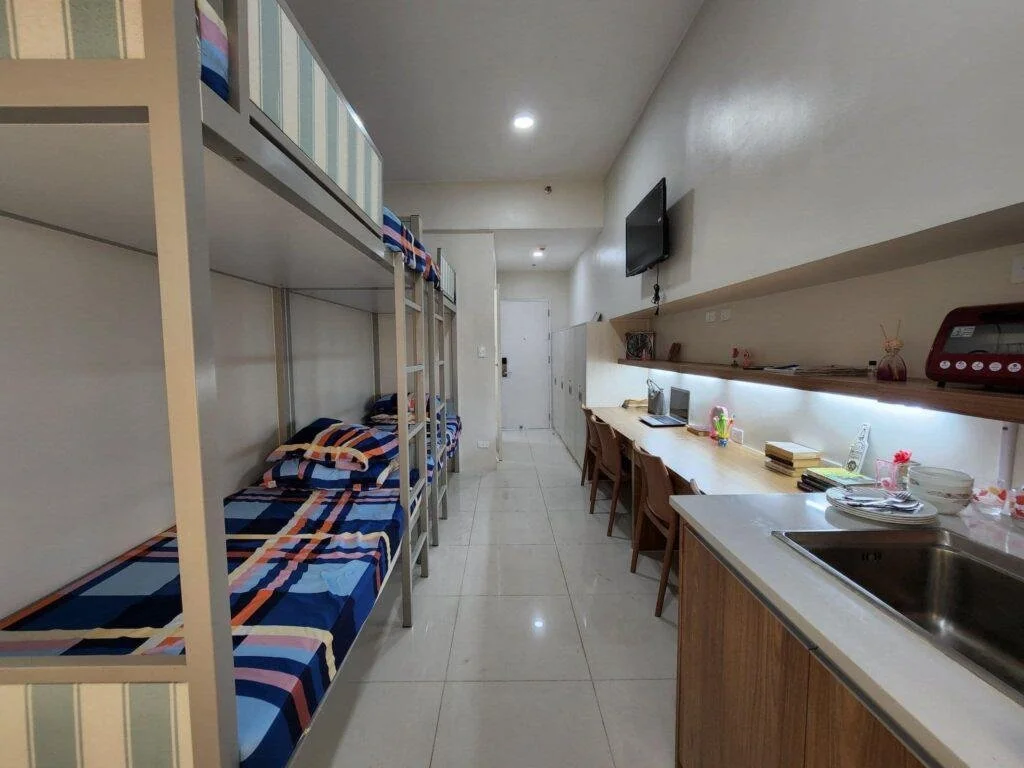
A boarding house is one of the most common housing options for students and young professionals in the Philippines, particularly for people who need to live near a university, workplace, review center, or training school. Depending on the property, you may rent a private room or bedspace while sharing facilities such as the kitchen, dining area, laundry area, or comfort room with other residents.
For students moving away from home for the first time, choosing a boarding house involves more than comparing monthly rent. You also need to consider location, security, privacy, utilities, house rules, roommates, ventilation, internet access, transportation, and the total cost of living.
So, is a boarding house better than a dorm or apartment? It depends on your budget and how much independence you want.
Generally, a boarding house offers a middle ground: it can be more affordable and social than an apartment while giving you more flexibility than some traditional dormitories.
This guide explains the difference between a dorm and boarding house, how much boarding house rooms may cost, what essentials you need, what it feels like to live in one, and how to make a small boarding-house bedroom comfortable and organized.
What Is a Boarding House?
A boarding house is a property where rooms or sleeping spaces are rented to individuals, usually on a monthly basis. Residents may have their own bedroom or share a room with other boarders, depending on the arrangement.
Common shared facilities include:
Kitchen
Dining area
Comfort room or bathroom
Laundry area
Living area
Study area
Parking area
Internet connection
The exact arrangement differs from one property to another. Some boarding houses provide a private room and private bathroom, while others offer shared rooms, shared bathrooms, and communal facilities.
The Philippine Statistics Authority recognizes boarding houses as a type of accommodation within its broader statistical treatment of institutional living quarters. In its census guidance, permanent lodgers in boarding houses are considered part of the institutional population under specified circumstances.
That distinction is important because “boarding house” does not necessarily describe one standard type of building. In everyday Philippine usage, the term may refer to anything from a simple house with rented rooms to a purpose-built student residence.
Dorm vs Boarding House: What Is the Difference?
The difference between a dorm and boarding house is primarily the way the accommodation is managed and structured.
A dormitory is commonly designed specifically for students and may be operated by a university, school, private company, or specialized residence provider. A boarding house is typically a private property where individual rooms or sleeping spaces are rented to boarders.
However, the terms can overlap. Some privately operated properties call themselves dormitories even though they function much like boarding houses.
Dorm vs Boarding House Comparison
| Factor | Dormitory | Boarding House |
|---|---|---|
| Main residents | Usually students | Students, workers, reviewees or young professionals |
| Management | School or private operator | Usually private owner/operator |
| Room arrangement | Often shared | Shared or private |
| Common areas | Usually available | Depends on property |
| House rules | Often structured | Varies by landlord |
| Curfew | More common | May or may not have one |
| Privacy | Usually low to moderate | Moderate to high for private rooms |
| Kitchen access | Depends on dorm | Often available, but rules vary |
| Social environment | Usually highly social | Depends on occupants |
| Flexibility | Can be less flexible | Often more flexible |
| Best for | Students wanting structured housing | Students or workers wanting budget-friendly accommodation |
The important point is that there is no universal definition based solely on the name used in an advertisement.
Before paying, ask the landlord exactly what you are renting: a bedspace, shared room, private room, studio-type unit, or full apartment.
Boarding House vs Apartment: Which Is Better?
The apartment vs boarding house decision usually comes down to privacy, independence and price.
A boarding house generally provides a bedroom or sleeping space while some facilities are shared. An apartment is normally a more independent residential unit where you have greater control over the space and, depending on the unit, your own kitchen and bathroom.
Apartment vs Boarding House
| Factor | Boarding House | Apartment |
|---|---|---|
| Monthly cost | Usually lower | Usually higher |
| Privacy | Depends on room | Generally higher |
| Kitchen | Often shared | Usually private |
| Bathroom | Often shared | Usually private |
| Utilities | May be shared or included | Usually paid by tenant |
| Furniture | May be partially furnished | Furnished or unfurnished |
| House rules | Usually more restrictive | Generally fewer shared-house rules |
| Roommates | Common | Optional |
| Maintenance | Often handled by landlord | Tenant may have more responsibilities |
| Best for | Budget-conscious renters | People wanting independence |
An apartment may look attractive because of its privacy, but the advertised rent isn't necessarily your total monthly cost.
You may also need to budget for electricity, water, internet, association dues, furnishings, transportation and other household expenses.
By contrast, some boarding houses bundle certain utilities or amenities into the monthly rate.
Current Philippine listings show just how widely prices can vary. Recent listings include bedspaces around ₱2,500–₱4,000 per month, while a female boarding-house arrangement in Makati was listed at ₱7,500 per person. These are individual listings, not national averages, and demonstrate why renters should compare properties in the specific area where they intend to live.
How Much Is Boarding House Room Rent in the Philippines?
There is no single nationwide boarding-house rental rate.
Rent depends on:
City or municipality
Distance from a school or business district
Private versus shared room
Number of occupants
Air-conditioning
Private versus shared bathroom
Furnishings
Wi-Fi
Utility inclusions
Parking
Security features
Lease terms
As a practical 2026 budgeting guide, students may encounter boarding-house and dorm-style accommodation in the approximate ₱2,500 to ₱10,000+ per month range, with lower prices generally associated with bedspace or basic shared arrangements and higher prices associated with private rooms, central locations, air conditioning and additional amenities.
Current listings support the wide variation. For example, recent Manila listings include bedspace at around ₱2,500–₱4,500, while another Makati boarding-house listing shows ₱7,500 per person. A Cebu dormitory provider currently lists shared-room rates starting at ₱6,000 per person and a two-person arrangement at ₱12,000 per person, with basic utilities and Wi-Fi included.
Don't compare rent alone
A ₱4,000 boarding house is not necessarily cheaper than a ₱5,000 one.
For example:
Boarding House A
₱4,000 rent
₱1,000 utilities
₱500 internet
= ₱5,500
Boarding House B
₱5,000 rent
utilities included
Wi-Fi included
= ₱5,000
In this example, the seemingly more expensive room is actually cheaper every month.
Always ask:
“Is the advertised price all-in?”
Then confirm exactly what “all-in” means.
How Many Students Go to Boarding Houses?
There is no reliable single nationwide figure for the number of Filipino students living in boarding houses.
This is an important distinction because Philippine census data does not provide a simple nationwide statistic called “students living in boarding houses.”
The PSA's 2020 Census of Population and Housing placed hotels, motels, lodging houses and dormitories into a broader institutional-living-quarter category. Nationwide, that category accounted for 17,813 institutional living quarters and 72,211 residents in 2020. However, that figure includes several types of accommodation and cannot be interpreted as 72,211 students living in boarding houses.
There is another complication: PSA guidance states that boarders in a residential house are counted differently depending on the number of boarders. In particular, a house with fewer than 10 boarders may be treated as a regular household rather than an institutional living quarter.
So if someone claims that a specific number of students nationwide currently live in boarding houses without a clearly defined dataset, be cautious.
What we can establish is that student housing is significant enough to have become an active policy concern. In January 2026, CHED and Pag-IBIG Fund announced Project BALAY, a partnership intended to expand access to safe and affordable housing for students, faculty and non-teaching personnel in higher education institutions.
How Does It Feel to Live in a Boarding House?
Living in a boarding house can feel very different from living with your family.
For many students, it is their first experience of having to manage their own schedule, money, food, laundry, cleaning and personal responsibilities.
The good side
You may enjoy:
More independence.
You decide when to study, sleep, eat and do household chores.
Being close to school.
A good location can significantly reduce your daily commute.
Making new friends.
Living with other students creates opportunities to build friendships and study together.
Lower housing costs.
Sharing facilities and living with several occupants can make housing more affordable.
A stronger sense of responsibility.
You learn to budget, clean your space and respect shared facilities.
Research involving university students in Davao found that living in boarding houses and dormitories could contribute to students' personal, social, academic and emotional development. At the same time, the study identified concerns involving safety and security facilities.
The challenging side
Boarding-house life can also mean:
Less privacy
Noise from roommates
Shared bathrooms
Queuing for facilities
Different sleeping schedules
Cleaning responsibilities
House rules
Visitor restrictions
Limited storage
Potential disagreements with roommates
Research from Central Philippine University likewise found that students commonly rented bedspaces on a monthly basis and experienced challenges involving the home environment, boarding-house conditions and relationships with other people.
The experience therefore depends heavily on the people you live with and the landlord who manages the property.
A cheap room can become expensive emotionally if the house is unsafe, noisy or poorly maintained.
Boarding House Essentials: What Should You Bring?
When moving into a boarding house, don't pack your entire home.
Prioritize items that improve sleep, hygiene, organization, studying and daily convenience.
Sleeping essentials
Bring:
Bedsheets
Pillow and pillowcase
Blanket
Mattress protector
Mosquito protection if necessary
Small bedside organizer
Confirm first whether the landlord provides a mattress, pillow or bed frame. Some current student accommodations provide foam, pillows, desks, chairs and other furnishings as part of the room.
Bathroom and hygiene essentials
Consider:
Towels
Toiletries
Shower slippers
Toiletry bag
Laundry basket
Tissue
Personal cleaning supplies
Small waterproof container
A hanging organizer can save valuable floor and counter space in a small room.
Study essentials
For students, a functional study area can be more important than decorative furniture.
Bring:
Laptop
Charger
Extension cord or power strip
Desk lamp
Headphones
Notebooks
Pens
Small organizer
Never overload electrical outlets. The Philippine Fire Code specifically prohibits practices such as tampering with electrical wiring or overloading electrical systems beyond their designated capacity.
Kitchen essentials
Only bring cooking equipment that your landlord allows.
Common useful items include:
Rice cooker
Electric kettle
Reusable water bottle
Plate
Bowl
Mug
Spoon and fork
Food containers
Dishwashing supplies
Do not assume you can use a gas stove, butane burner or open flame in your room. Some boarding houses specifically prohibit these appliances for fire-safety reasons.
Always read the house rules before buying appliances.
How to Arrange a Small Bedroom in a Boarding House
A small boarding-house room can still be comfortable when every item has a purpose.
The biggest mistake is trying to fit too much furniture into the room.
1. Start with the bed
The bed is usually the largest item, so position it first.
Avoid placing it where it blocks:
The door
Windows
Wardrobe access
Electrical outlets
Emergency exits or required means of egress
Fire-safety requirements emphasize keeping routes to the outside unobstructed.
2. Use vertical storage
Instead of filling the floor with cabinets, use:
Hanging organizers
Wall shelves where permitted
Over-door organizers
Tall storage boxes
Hooks
Vertical storage keeps frequently used items accessible without consuming valuable floor space.
3. Keep the study area simple
A small desk only needs enough space for your laptop and essential school materials.
Use:
Laptop + desk lamp + pen holder + small notebook organizer
instead of covering the entire desk with books and decorations.
4. Use under-bed storage
The space below the bed is valuable.
Store:
Shoes
Folded clothes
Extra bedding
Bags
Seasonal items
Use containers with lids to keep dust away.
5. Separate clean and dirty items
Put your laundry basket near the door or bathroom rather than beside your bed.
This makes your room easier to maintain and prevents dirty clothes from accumulating around your sleeping area.
6. Leave walking space
Do not try to fill every empty corner.
A small amount of clear floor space can make a tiny bedroom feel significantly larger.
A good boarding-house room should prioritize:
sleep → study → storage → movement
before decoration.
12 Things to Check Before Renting a Boarding House
The biggest mistake first-time boarders make is looking only at the room.
Inspect the entire property.
1. Location
Ideally, choose a place close enough to your school or workplace that commuting is manageable.
A slightly more expensive room within walking distance can sometimes save money on transportation and reduce travel time.
2. Neighborhood
Visit during the day and, when possible, observe the surrounding area at night.
Look for:
Street lighting
Nearby businesses
Public transportation
Grocery stores
Pharmacies
Hospitals or clinics
Police or fire services
3. Security
Check for:
Secure locks
CCTV
Proper gates
Adequate lighting
Fire extinguishers
Clearly accessible exits
Secure windows
Don't treat fire safety as an optional amenity.
4. Water supply
Ask whether water is:
Available 24/7
Included in rent
Individually metered
Shared among occupants
A low rent isn't very attractive if water interruptions are frequent.
5. Electricity
Ask exactly how electricity is calculated.
Possible arrangements include:
Included in rent
Divided equally among occupants
Based on a submeter
Charged at a landlord-defined rate
Get the arrangement in writing.
6. Internet
For students and remote workers, Wi-Fi can be essential rather than a luxury.
Ask about:
Internet provider
Speed
Number of users
Router location
Backup connection
Whether the fee is included
7. Bathroom
Check:
Water pressure
Cleanliness
Number of users
Ventilation
Hot-water availability
Toilet condition
8. Cooking rules
Some boarding houses allow cooking only in communal kitchens. Others prohibit gas or open flames and permit only electrical appliances.
Never assume.
9. Curfew and visitor rules
Ask:
Is there a curfew?
Can guests visit?
Are overnight guests allowed?
Can family members stay temporarily?
Are there separate rules for weekends?
Current boarding-house policies can differ dramatically; some properties advertise no curfew, while others restrict visitors and cooking.
10. Roommates
Ask how many people will occupy the room.
A room advertised as “₱4,000” could mean ₱4,000 for the whole room—or ₱4,000 per person.
Confirm before paying.
11. Contract and payment terms
Read the agreement before handing over money.
Clarify:
Monthly rent
Deposit
Advance rent
Minimum stay
Notice period
Refund conditions
Utility charges
Penalties
Termination conditions
Republic Act No. 9653 expressly includes dormitories, rooms and bedspaces offered for rent within its definition of residential units, subject to the law's coverage and conditions. It also contains provisions concerning advance rent and deposits.
For current rent-control protections, note that the National Human Settlements Board's Resolution No. 2024-01 covers the period January 1, 2025 through December 31, 2026 and provides a maximum annual rent increase of 1% in 2026 for covered residential units costing ₱10,000 or less, subject to the resolution's conditions and exemptions. Student boarding houses, dormitories, rooms and bedspaces have a specific provision concerning the frequency of increases.
Because coverage can depend on the property, rent level, location and other circumstances, check the current rules and your local government requirements rather than assuming that every boarding arrangement is covered in exactly the same way.
12. Get receipts and documentation
Keep:
Lease agreement
Official receipts or proof of payment
Deposit records
Utility statements
Photos of the room before moving in
Written conversations about important agreements
Taking photographs during move-in can also help document the condition of the property.
What Is a Good Boarding House for Students?
The best boarding house isn't necessarily the cheapest one.
A good student boarding house should offer a reasonable balance of:
Safety + location + affordability + cleanliness + privacy + study environment
For example, a room that costs ₱500 more but is a 5-minute walk from school may be better value than a cheaper room requiring two jeepney rides every day.
Likewise, a cheaper shared room may not be worthwhile if it has unreliable water, poor ventilation, weak security or excessive noise.
The ideal room depends on your priorities.
Choose a boarding house when:
You have a limited budget.
You want to live close to school or work.
You don't mind sharing facilities.
You want a social living environment.
You want fewer household responsibilities than renting a full apartment.
Choose a dorm when:
You prefer structured student housing.
You want a community of other students.
You are comfortable with more rules.
School-managed accommodation is convenient and affordable.
Choose an apartment when:
Privacy is a high priority.
You want your own kitchen or bathroom.
You prefer greater independence.
You are willing to pay more for your own space.
You plan to stay longer and want more control over your living environment.
Boarding House Checklist Before You Move In
Save this checklist on your phone and use it when viewing rooms.
Before paying:
☐ Confirm exact monthly rent
☐ Confirm whether rent is per room or per person
☐ Ask about deposit and advance payment
☐ Ask whether utilities are included
☐ Confirm electricity calculation
☐ Confirm water availability
☐ Test mobile signal
☐ Test Wi-Fi
☐ Inspect the bathroom
☐ Check the locks
☐ Check windows and ventilation
☐ Ask about CCTV and security
☐ Locate fire extinguishers and exits
☐ Ask about curfew
☐ Ask about visitors
☐ Ask about pets
☐ Ask about cooking
☐ Ask about laundry
☐ Ask about parking
☐ Ask about roommates
☐ Read the contract
☐ Get proof of payment
☐ Photograph the room before moving in
Frequently Asked Questions About Boarding Houses in the Philippines
Is a boarding house cheaper than an apartment?
Usually, a boarding house can be cheaper because tenants may share bedrooms, bathrooms, kitchens and other facilities. However, the actual cost depends on location, room type, occupancy and included utilities.
What is the difference between a dorm and boarding house?
A dormitory is generally structured around student accommodation and may have more standardized management and rules. A boarding house generally rents rooms or sleeping spaces in a privately operated property. In the Philippines, the two terms can overlap, so check the actual facilities and rules rather than relying only on the property's name.
How much is a boarding house room rent?
There is no fixed national price. Recent Philippine listings show examples ranging from roughly ₱2,500 for basic bedspace to ₱7,500 or more per person for higher-priced boarding arrangements, while some premium student accommodations exceed ₱10,000.
What are boarding house essentials?
The most useful essentials include bedding, toiletries, towels, laundry supplies, a power strip, study materials, food containers and basic kitchen items if cooking is permitted.
How does it feel like to live in a boarding house?
Living in a boarding house can provide independence, convenience and opportunities to make friends, but it can also involve less privacy, shared facilities, noise and house rules. Individual experiences vary significantly depending on the property and roommates.
How many students go to boarding houses in the Philippines?
There is no single reliable nationwide figure specifically measuring students living in boarding houses. PSA census categories combine boarding houses and other types of institutional accommodation, making it inappropriate to treat the broader figure as the number of boarding-house students.
Is a boarding house better than an apartment?
A boarding house is generally better for someone prioritizing affordability and convenience. An apartment is usually better for someone prioritizing privacy and independence.
How can I arrange a small bedroom in a boarding house?
Put the bed in the most practical position first, maintain clear walking space, use vertical and under-bed storage, keep the study desk uncluttered and avoid blocking windows or routes to exits.
Final Thoughts: Is a Boarding House Right for You?
A boarding house can be an excellent choice for Filipino students and young professionals who want affordable accommodation without taking on the full cost and responsibility of an apartment.
But don't choose a room based only on its monthly rent.
The best decision considers the total monthly cost, commute, safety, utilities, internet, bathroom facilities, roommates, house rules and overall living environment.
Most importantly, visit the property before paying whenever possible. A room can look perfect in photos but feel very different in person.
For students moving away from home for the first time, the right boarding house can provide more than somewhere to sleep. It can become a convenient base for studying, working, building friendships and learning how to live independently.
And before you sign anything, remember the simplest rule of boarding-house hunting:
Don't ask only, “How much is the rent?” Ask, “What exactly am I getting for that rent?”